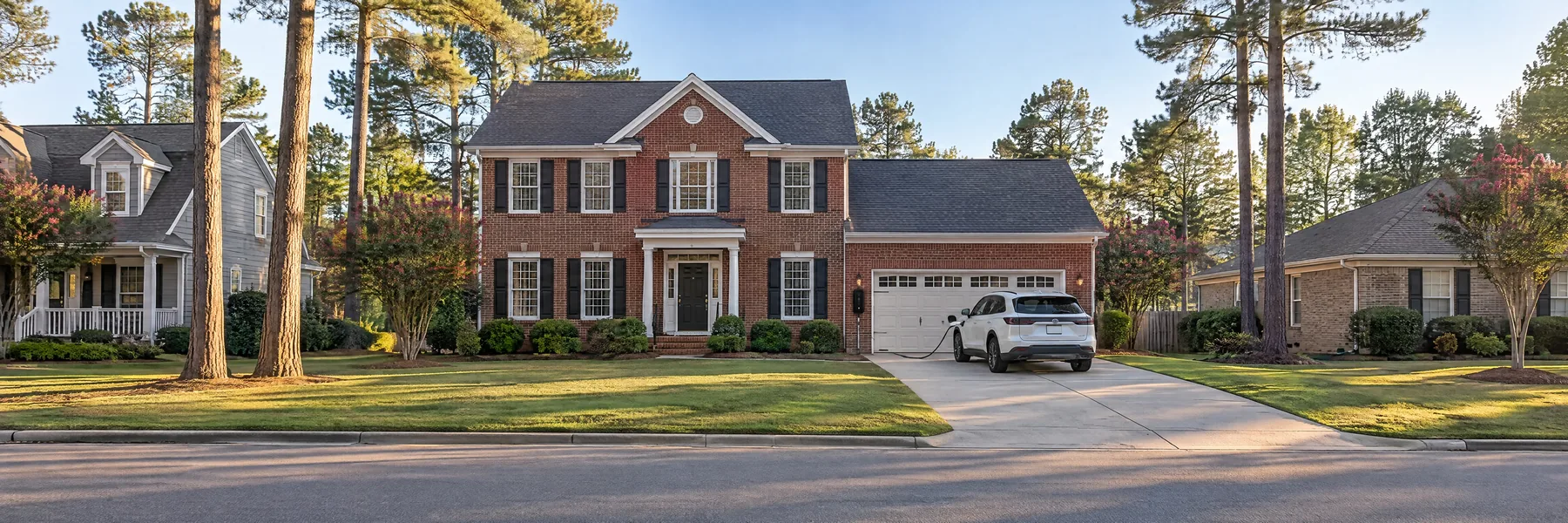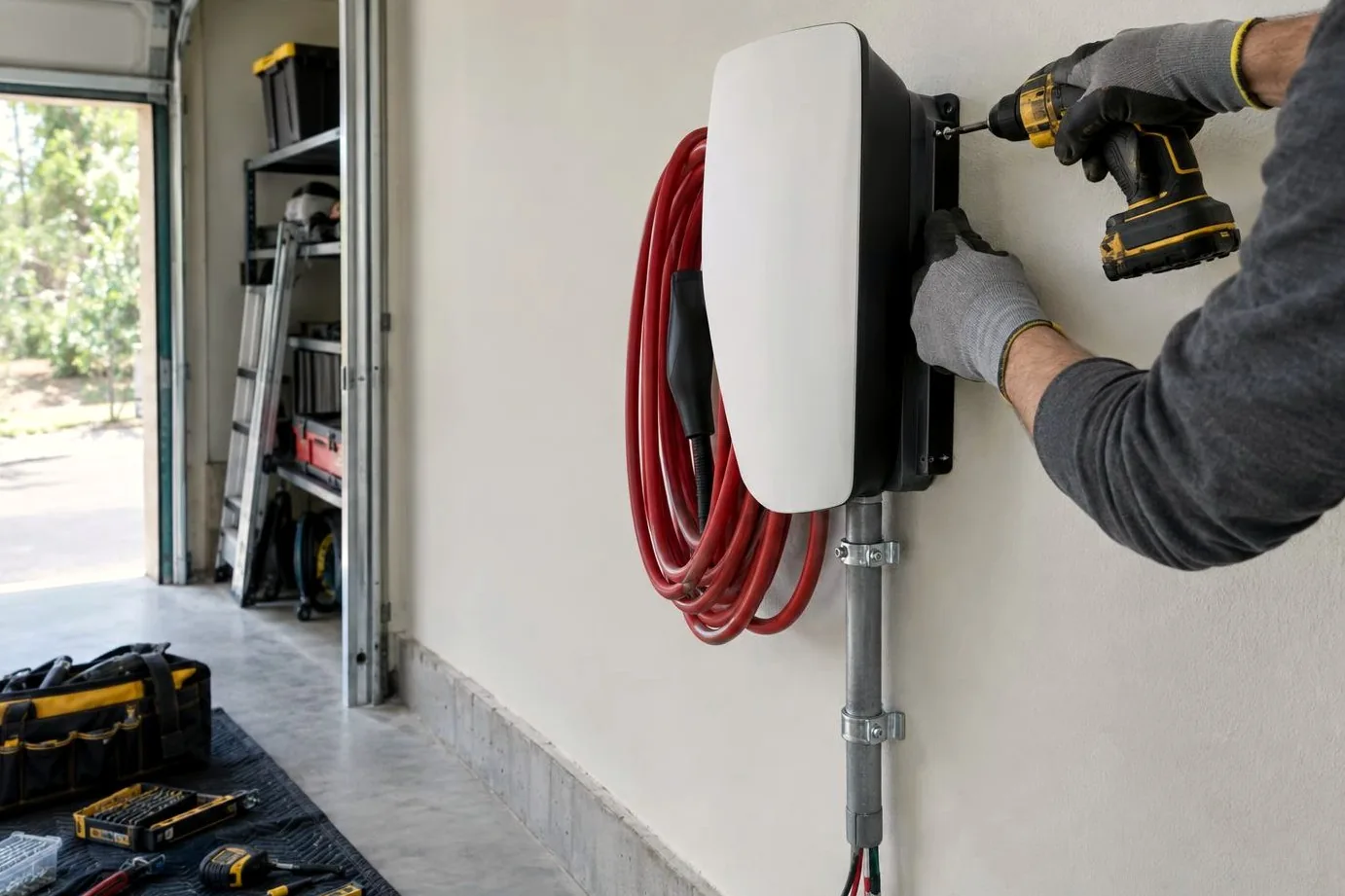
Full-speed charging on a Tesla Wall Connector means 48 amps, or about 11.5 kW, on a 60-amp breaker of its own. We run that circuit from the panel to the spot where the charge port lands, mount the unit inside or outdoors, and connect it to your Wi-Fi. Charging schedules and firmware updates then arrive through the Tesla app.
Raleigh garages with a Tesla parked beside a Kia, Ford or Volkswagen suit the Universal Wall Connector. Its cable carries the Tesla connector plus an integrated J1772 adapter, so either car can plug in. Homes with two Teslas can link up to six Gen 3 units through power sharing, so both cars charge on one circuit without overloading the panel.
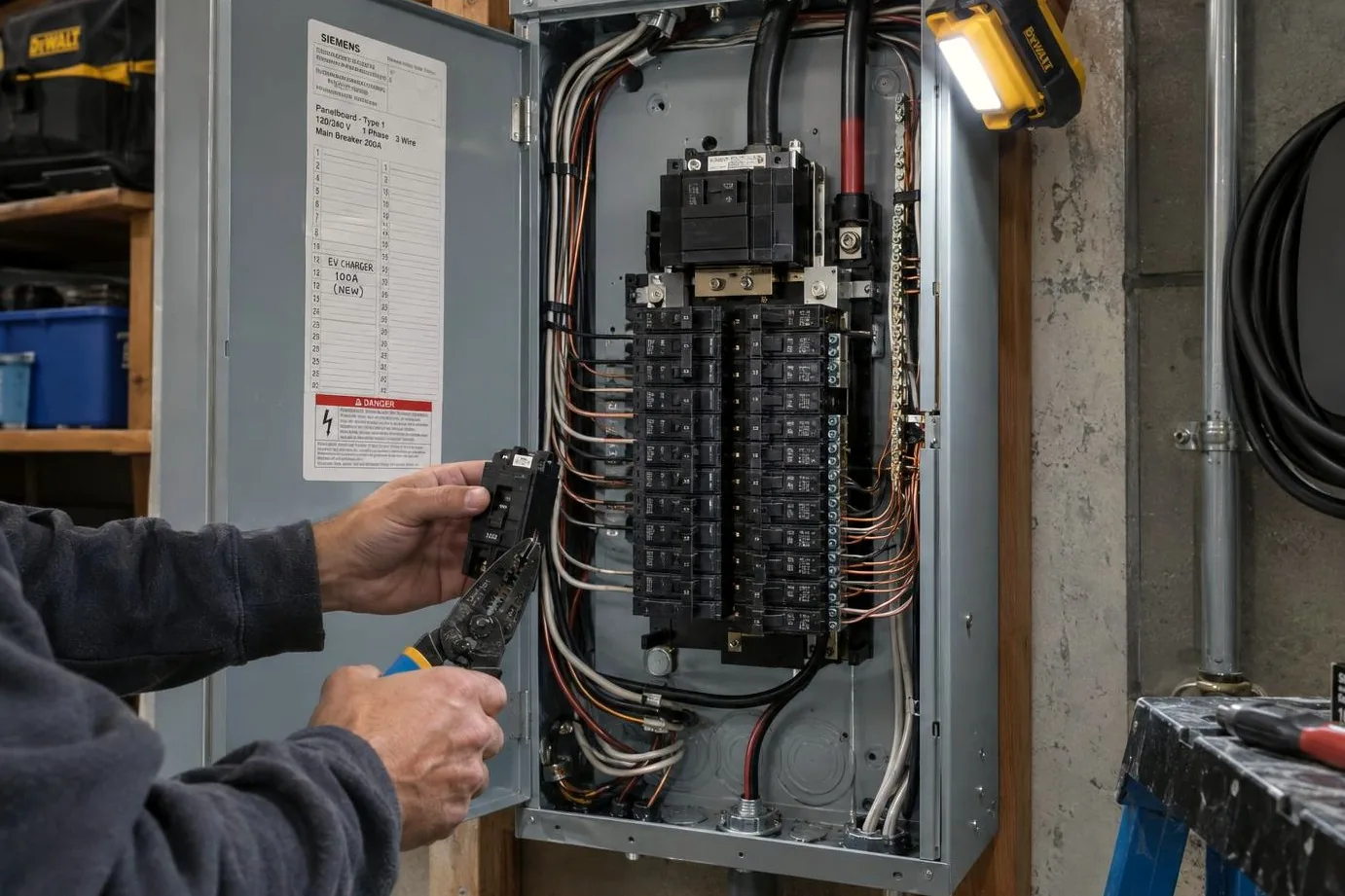
Raleigh's median home was built in 1997, and homes from the last 20 years mostly have 200-amp panels with room to spare. A charger usually fits without a new panel. The real question is how much spare capacity your house has once the heat pump, range and dryer are counted.
We answer it with a load calculation at the free estimate. When the numbers come up short, the fix runs from load management to a subpanel to a 200-amp service upgrade, and we choose the smallest one that holds up. Older homes from the 1960s and 1970s are the likeliest to need one of the bigger fixes.
Level 2 Charger Installation for Any Brand
Level 2 charging puts back roughly 10 to 30 miles per hour of charging, compared with 2 to 5 from an ordinary outlet. Picture a Raleigh driver commuting to Research Triangle Park. Replacing that 34-mile round trip takes 7 hours or more on a wall outlet and roughly 1 to 3.5 hours on Level 2.
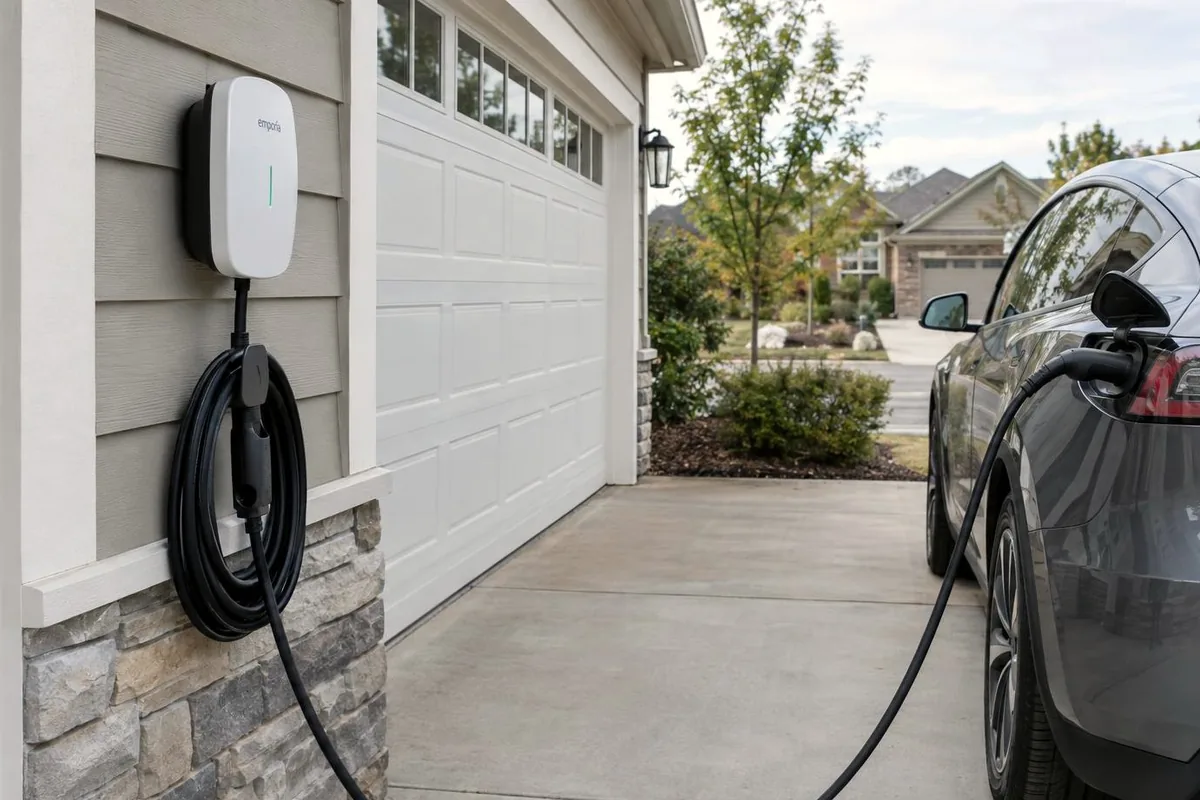
Our installs cover ChargePoint, Emporia, Wallbox, JuiceBox, Ford and Rivian chargers, wired direct or on a plug. Choose the charger after we see the panel, so its amperage suits both the house and the car's onboard charger.
NEMA 14-50 Outlet Installation for Portable Chargers
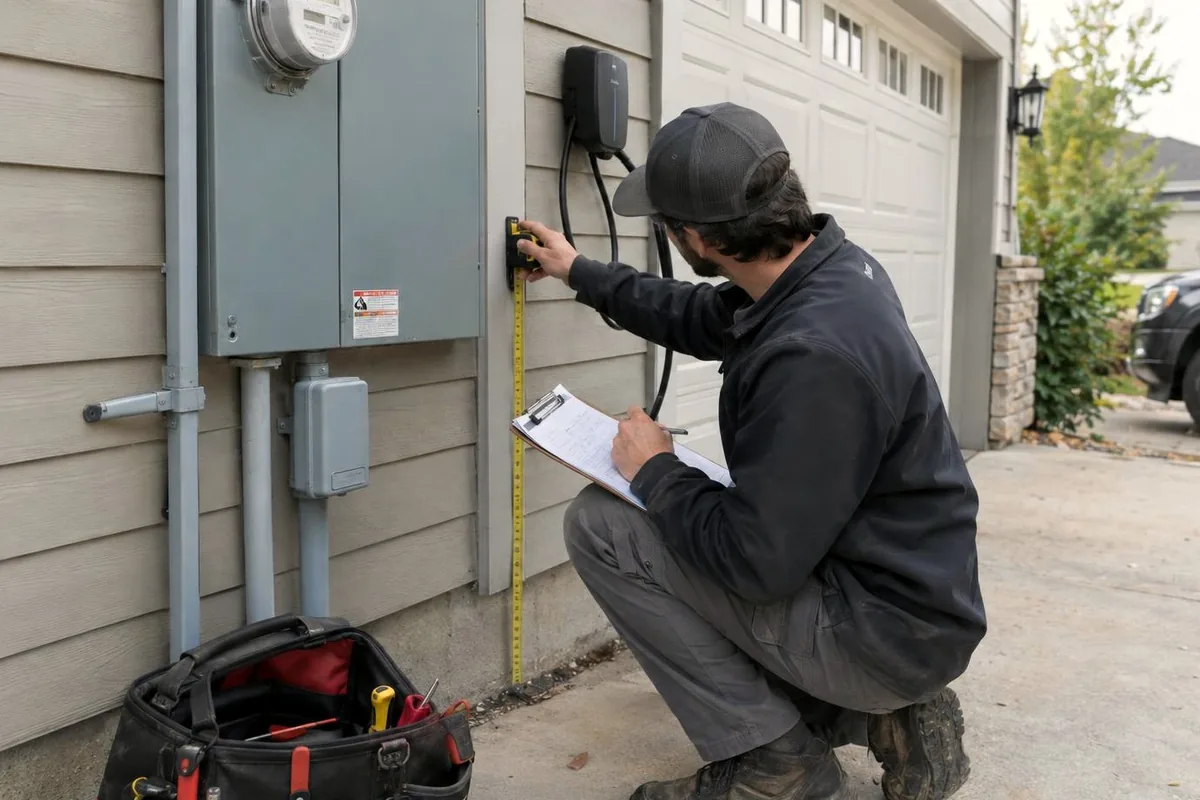
A NEMA 14-50 outlet gives the car's own mobile connector, or a portable Level 2 unit, a 240-volt socket of its own. Each one we install sits on its own breaker, never shared with a dryer, within easy reach of the parking spot.
Plug-in setups top out lower than hardwired ones. Duke Energy notes that any charger drawing more than 40 amps must be hardwired, so a 48-amp Wall Connector or a high-output ChargePoint unit always gets a direct connection to the circuit.
Load Management Instead of a New Panel
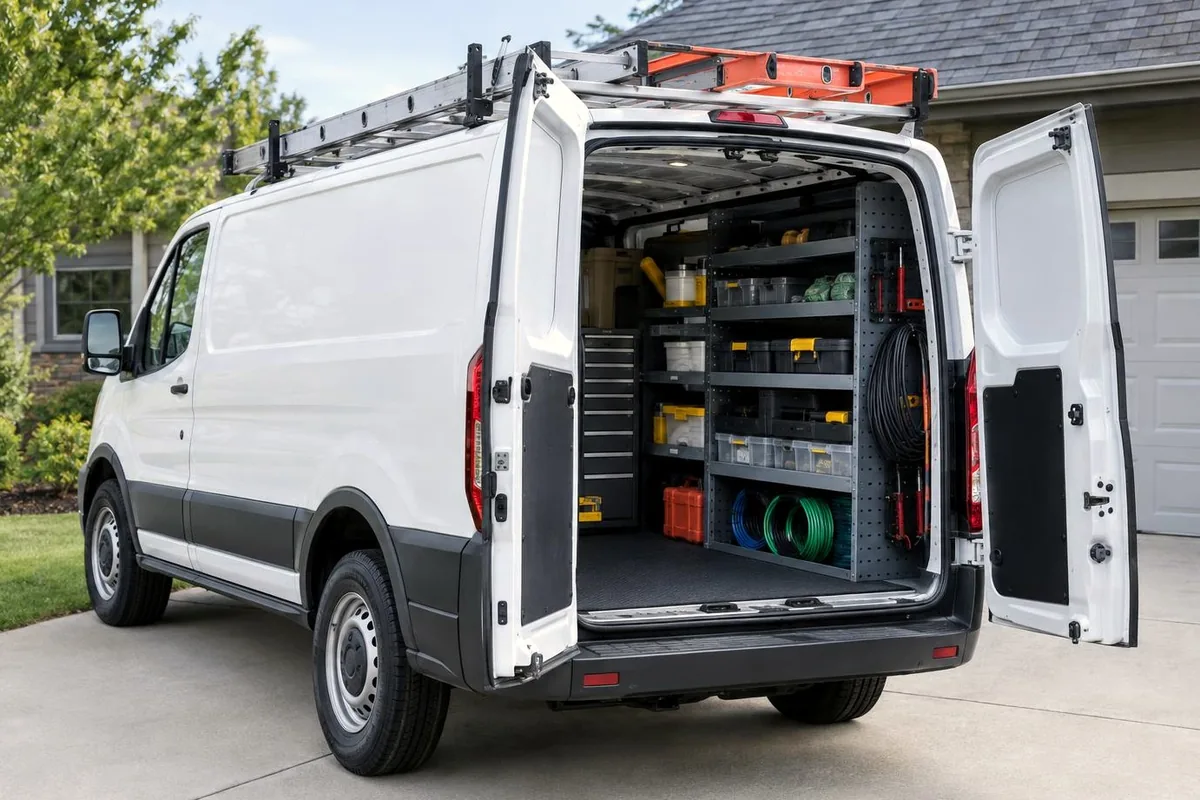
Load management watches what the house is drawing and backs the charger off when the oven, heat pump and dryer run together. On a Raleigh home close to its limit, that control often avoids a panel upgrade altogether. Both cars in a two-EV garage can share the same managed circuit, with the charge rate split between them whenever both are connected.
Skipping that math has a price. During the June 2026 rush to beat the federal credit deadline, many owners overpaid by $3,000 to $8,000, and most of the excess went into panel upgrades. We run the numbers first and quote the cheapest fix that holds up.
Garage, Carport and Exterior Wall Installs
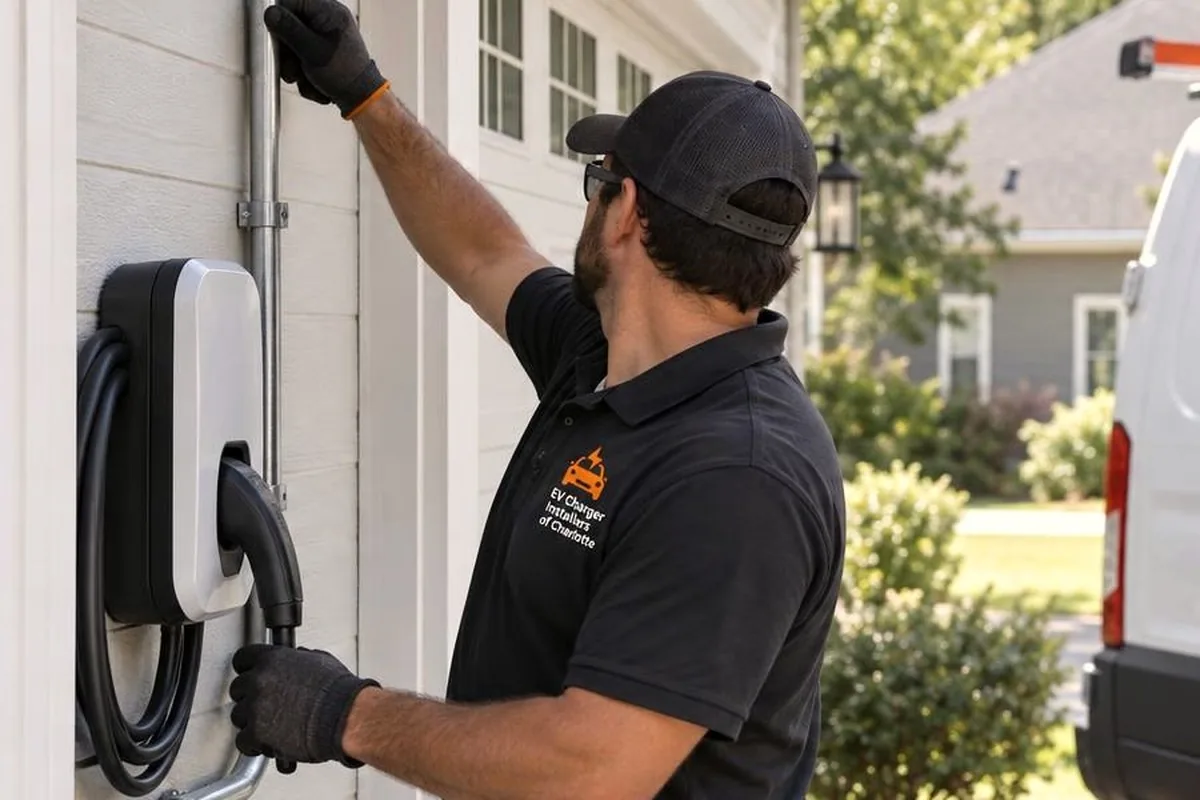
A garage is optional for the Duke credit. What Duke needs is a charger fed from the home's own panel. We mount chargers in attached garages, on carport posts and on brick or siding outside, with weather-rated conduit and wire the whole way from the panel.
A townhome with a shared wall or a long run to a detached garage takes more planning, and we price that run before the job starts. The mount goes where the cable reaches the car without crossing a walkway.